
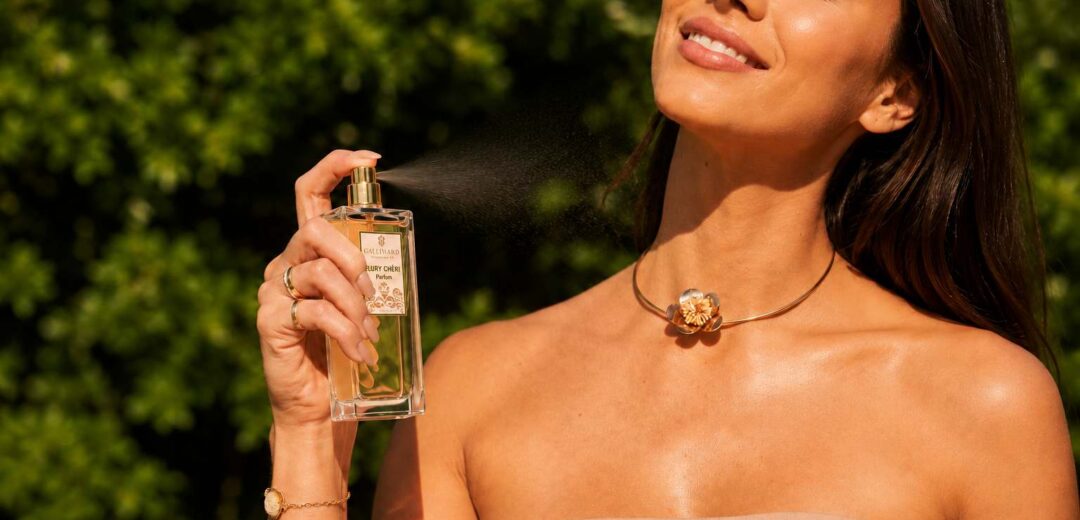
Why can’t we smell our own fragrance after a few minutes ?
Written on 21 June 2026


You just applied your favorite fragrance. In the first few minutes, the scent envelops you, transports you, boosts your mood. However, progressively as time goes on, the scent seems to disappear. To your surprise, you still get compliments on it even though you don’t perceive it at all anymore. What’s going on?
This phenomenon, universal and perfectly natural, has a name: olfactory adaptation, or olfactory habituation. , Far from being a medical problem or a sign that your perfume has evaporated, it reveals a fascinating mechanism in the human brain, inviting us to rethink the way we experience perfume on a daily basis.
At Galimard, Perfumery founded in Grasse in 1747, this beautiful relationship between humans and scents is at the heart of our savoir-faire. We will tell you everything you need to know about what’s going on in your brain and how to make the best of it.
What is Olfactory Adaptation? The brain and it’s perception of smells
The neurologic mechanism behind the “disappearance” of smells
Our olfactory cells, situated deep in the nose, are extremely sensitive sensory receptors. When a fragrant molecule gets in contact with them, a signal is sent to the brain, more precisely to the olfactory bulb, then to the limbic system, where emotions and memories live.
If they are inundated constantly with the same signal, the receptors adapt to the situation. It’s a mechanism of neuroadaptation : to economize resources and maintain attention availability for new (potentially dangerous or important) input, the brain progressively diminishes it’s response to constant or familiar odors.
In other terms, your brain is not « deleting » the odor, it’s just deciding that it doesn’t require any special attention. It’s the same principle for white noise or adapting to the temperature in an environment we become accustomed to.
How much time does it take before we can’t smell our own perfume anymore?
The speed of the mechanism of olfactory adaptation varies depending on the person and the smell, but there are studies in psychophysiology demonstrating that generally:
- After 15 to 20 minutes, the perception of one’s own fragrance diminishes significantly
- After 30 to 40 minutes, most people are not conscious anymore of their own perfume.
- The base notes, which are stronger, can stay perceptible for longer periods of time. This is actually one of the secrets to creating a true perfume composition.
This delay explains why some people continuously perfume themselves, sometimes to an excess, thinking that their fragrance
Why is this phenomenon more obvious with one’s own perfume ?
The effect of exposure is repeated
The more you wear a certain perfume, the more your brain integrates it as a « neutral » signal, not a threat. Your olfactory receptors become specifically desensitized to this aromatic signature. This is why you can still strongly smell the perfume of someone else in the room, when they are unaware of their own fragrance.
The difference between active and passive sense of smell
There are two types of olfactory perception :
Ortho-nasal sense of smell – by the nose, with intentional breathing in. It’s voluntary, active, and adapts quickly.
Retro-nasal sense of smell – from the throat, during swallowing or with normal breathing. It is more diffused, less conscious, and less subject to rapid adaptation.
It’s often via this pathway that you continue smelling your own perfume without realizing it, with a subtle presence influencing your mood, without you being able to clearly identify it.
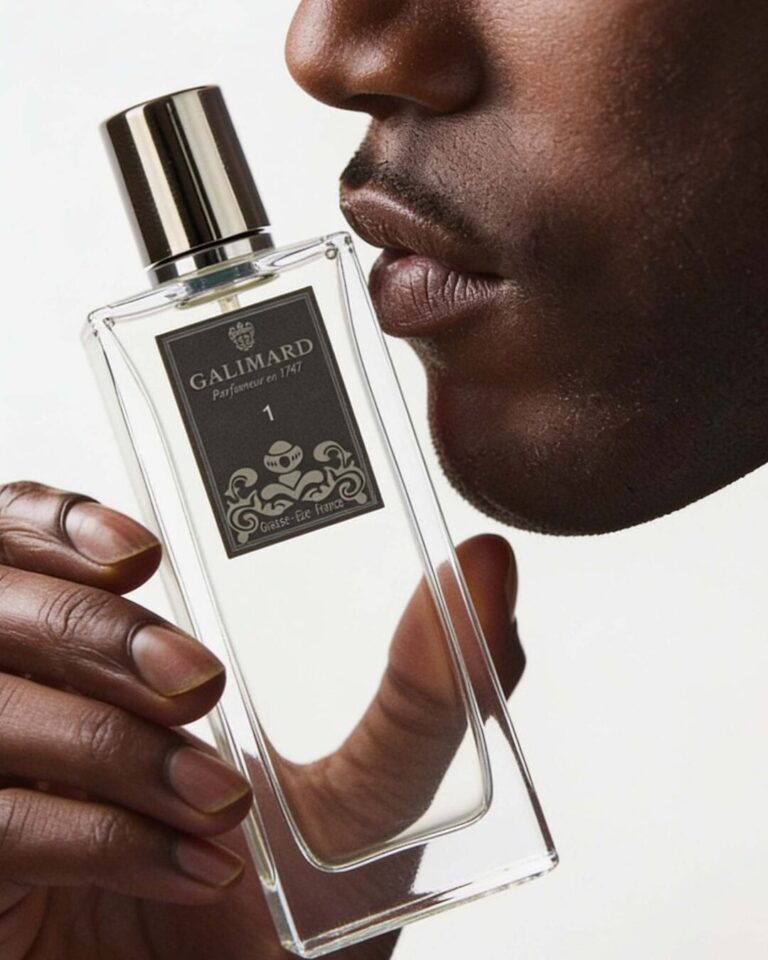
The rôle of the Perfumer: To create perfumes that can withstand olfactory adaptation
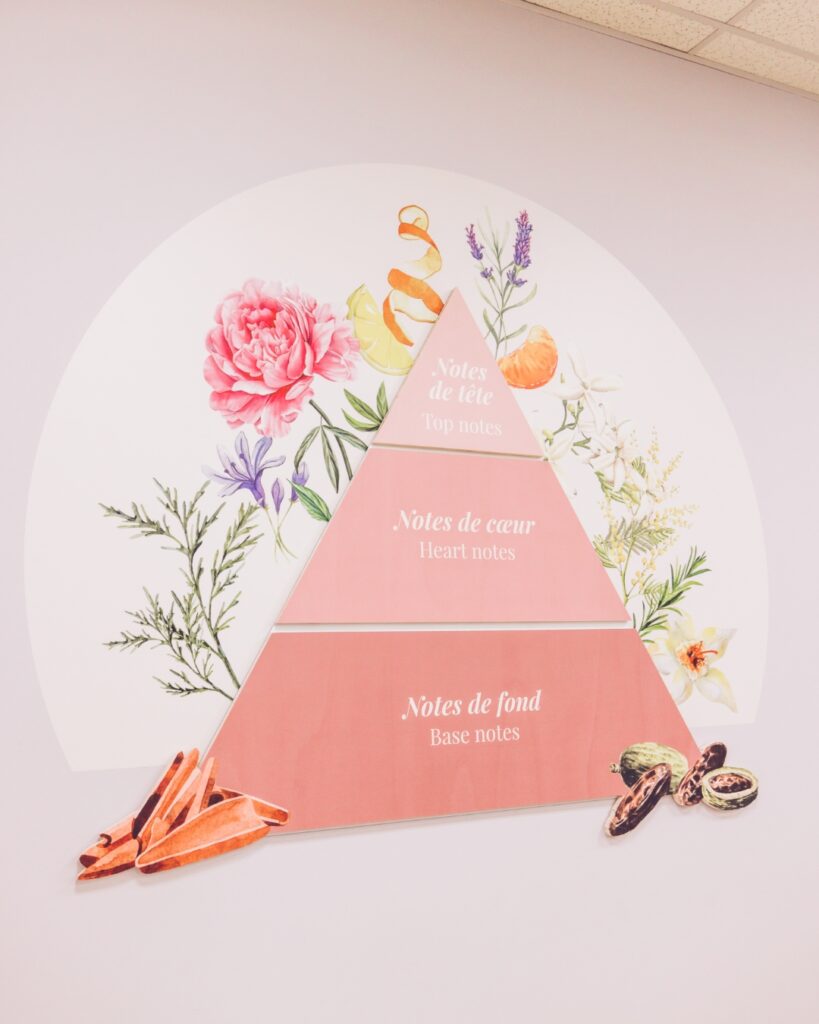
The art of the olfactory pyramid
At Galimard, every fragrance is developed using an olfactory pyramid with three levels:
Head notes, the most volatile, which evaporate in 15 to 30 minutes. These are the first impressions : Fresh, lively, often hesperide or herbal.
Heart Notes appear when the head notes have calmed and constitute the true character of the perfume. Floral, spicy, fruity, these can stay for 1 to 4 hours.
Base notes, the most persistent, stay present for hours, and sometimes the whole day. Wood, amber, musk, resins, these are the notes that define a legendary perfume and continue the magic on our skin, whether you are consciously aware of it or not.
A quality perfume, composed by an expert nose, is designed with this evolution in mind. It creates an olfactory experience that changes and reveals itself over time, limiting sensory monotony and taking rapid adaptation into account.
Concentration : a decisive factor for scent durability
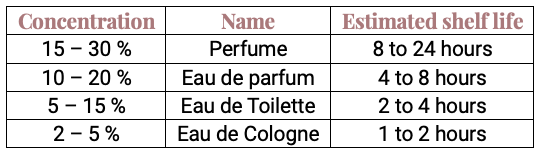
The concentration of primary fragrant materials directly determines how long a fragrance will last :
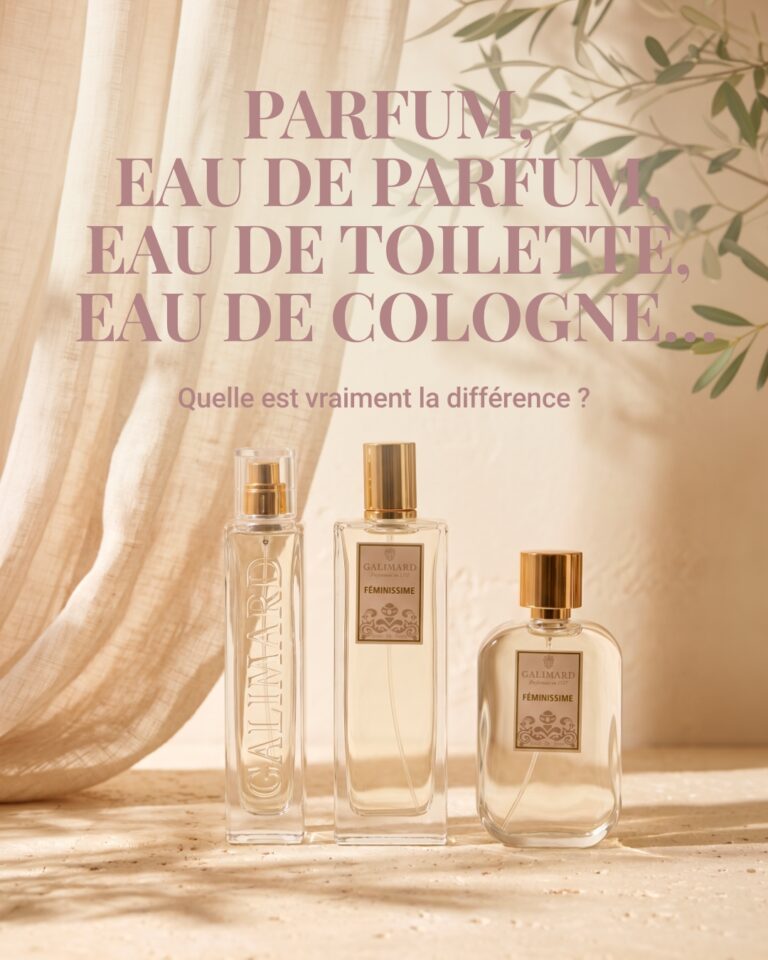
Galimard proposes feminine fragrances and masculine fragrances in different concentrations, as well as a line of Eaux de Cologne for all uses and intensities.
Practical advice for experiencing perfume
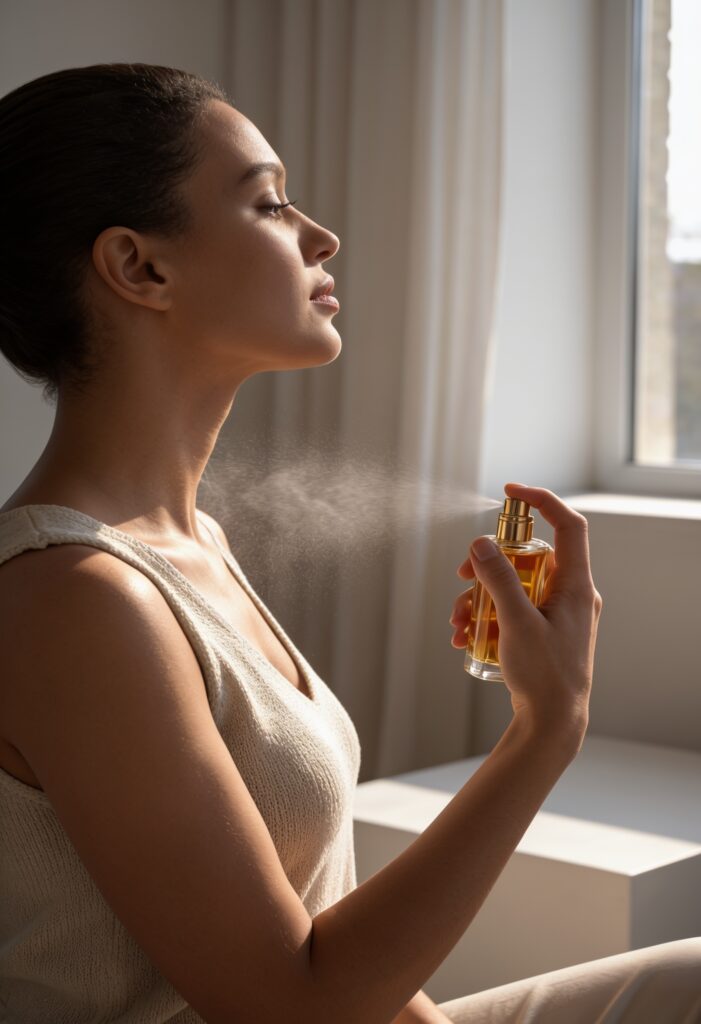
Where to apply perfume to ensure it lasts as long as possible ?
a slight rise in temperature, which diffuses aromatic molecules all day:
- The internal side of the wrists
- The elbow crease
- The base of the head and neck
- The knee crease
- Behind the ears
Avoid rubbing your wrists together after application, this popular gest can break the molecules and alter the olfactory development of the perfume.
Hydrate your skin to prolong the perfume’s long-lastingness
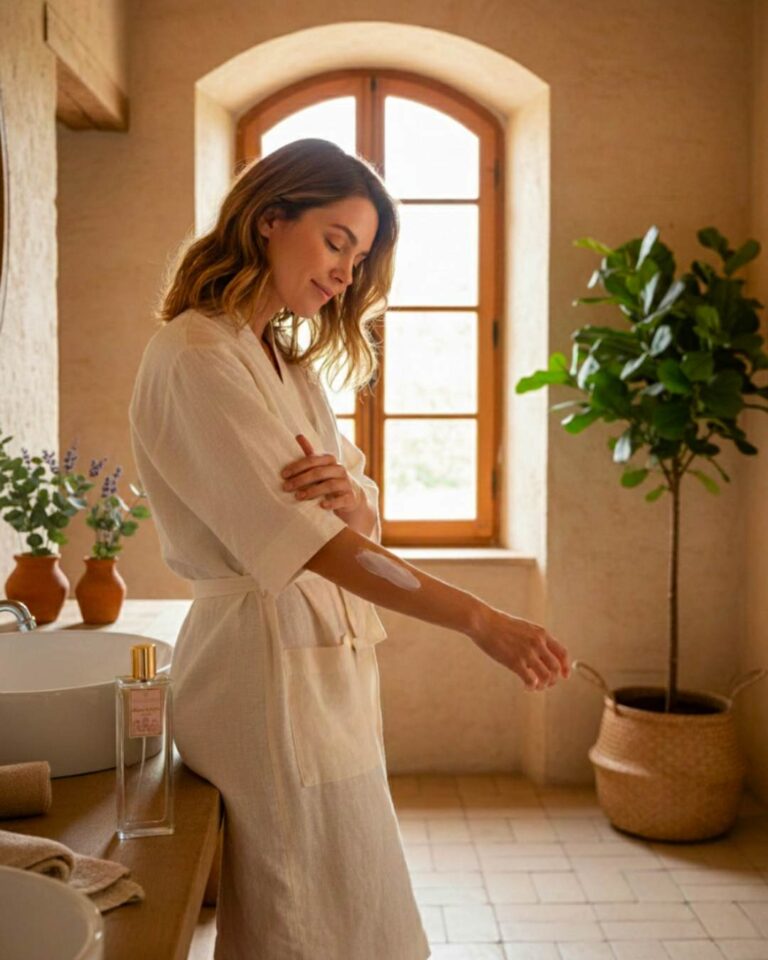
Well hydrated skin will better retain fragrances than dry skin. Applying a body lotion that is either not perfumed, or perfumed with a complimentary fragrance to your perfume, creates a “bed” which is more favorable to molecules of fragrance. Our cosmetic line at Galimard was developed to be complementary to our fragrances to create a coherent and prolonged sensory experience.
Alternate perfumes to retain stronger perception
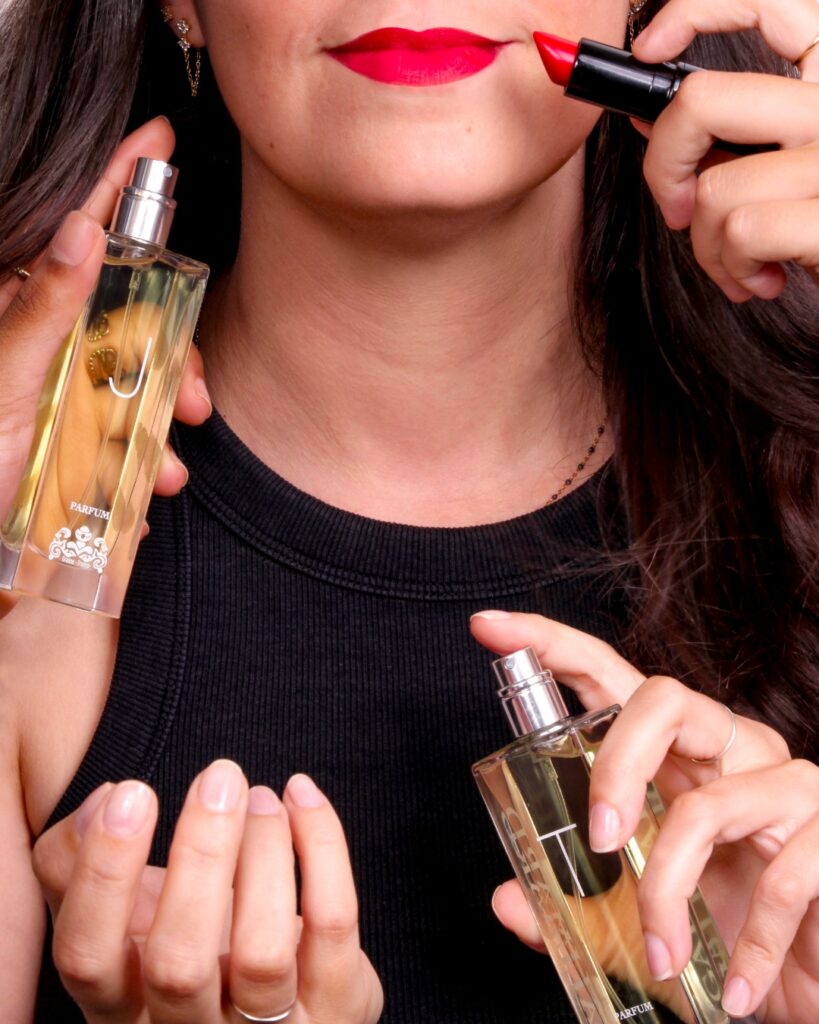
Keeping an olfactory wardrobe with two or three fragrances is not only a way to demonstrate the facets of our personality following our mood or the season, it’s also a way to preserve our power of perception. Our best sellers can help you construct this wardrobe with emblematic creations of our perfumery.
Perfume your environment for a continuous olfactory experience
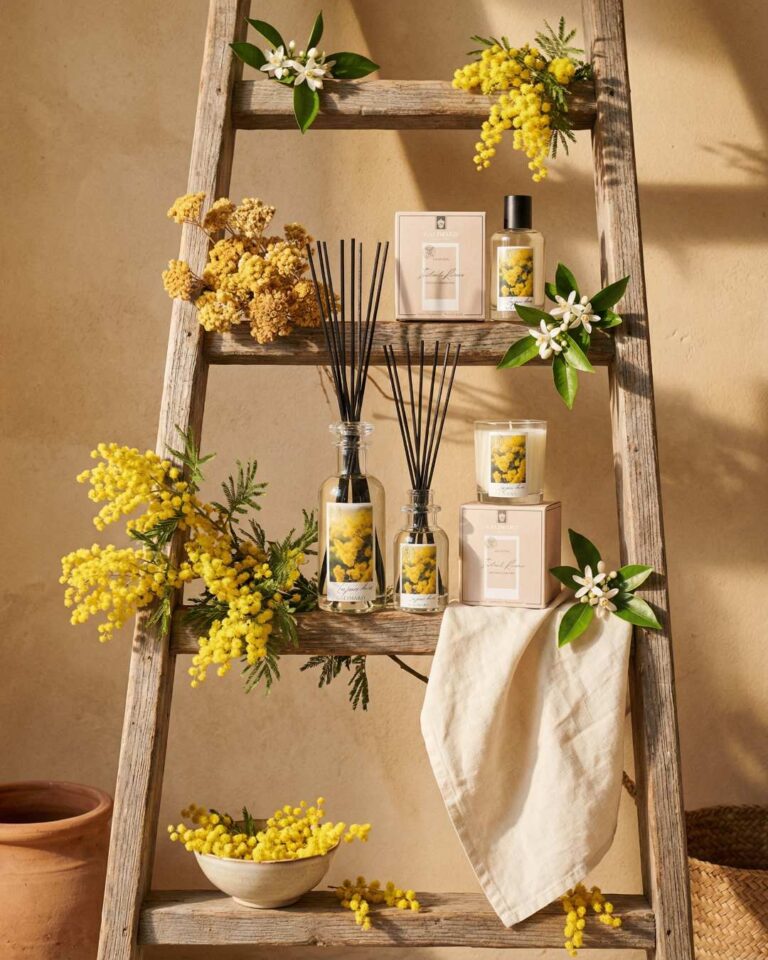
For those that wish to surround themselves with a fragrance without being overcome olfactory adaptation, Galimard ambiance perfumes offer an elegant solution. Candles, diffusers, and ambiance perfumes create an atmosphere that is subtle and long lasting.
Frequently Asked Questions About Perceiving Your Perfume
It’s not just a matter of olfactory adaptation. Your skin’s chemistry plays a crucial role. Skin pH, sebum production, diet, hydration levels, and even certain medications all influence how fragrance molecules settle and evolve on your skin. Dry skin, in particular, doesn’t retain fragrance as well. That’s why Maison de Parfums Galimard offers a range of scented body creams that combine moisturizing skincare with complementary fragrances to help extend both the longevity and richness of your scent.
This is due to a phenomenon called olfactory adaptation. Your olfactory receptors gradually become less sensitive to constant smells in order to conserve your brain’s processing resources. The fragrance is still there—your brain has simply stopped registering it.
Take a break from wearing your fragrance for 24 to 48 hours, or smell neutral scents such as coffee beans or wool to help “reset” your olfactory receptors. When you return to your perfume, you’ll notice it with renewed intensity.
No. Our sense of smell is highly individual. Some people naturally have a higher detection threshold, meaning they perceive scents less easily and become accustomed to them more quickly. Others retain a sharper sense of smell over time. Professional perfumers—known as noses—develop their olfactory sensitivity through rigorous training, learning to identify and memorize hundreds of raw fragrance materials. You can discover this expertise firsthand during our perfume creation workshops in Grasse, Èze, or Paris.
The most reliable method is to ask someone close to you. Since their sense of smell hasn’t been continuously exposed to your fragrance, they’ll be able to judge its presence objectively. You can also avoid reapplying your perfume for a few hours, then carefully smell your wrist. In many cases, the base notes will still be clearly detectable.
Yes. By avoiding your fragrance for 24 to 48 hours, your olfactory receptors regain their sensitivity, allowing you to experience it intensely once more. Some perfumers also recommend rotating fragrances with the seasons or different occasions, not only to enrich your olfactory experience, but also to prevent becoming completely desensitized to a single signature scent.
Absolutely. People around you aren’t constantly exposed to your fragrance, so they continue to smell it normally. If you’re unsure whether your perfume is still noticeable, simply ask someone nearby.
Parfum (15–30% fragrance concentration) offers the greatest longevity, followed by Eau de Parfum. The higher the concentration, the richer and more long-lasting the base notes tend to be.
Choose a Parfum or Eau de Parfum, apply it to well-moisturized skin, and focus on pulse points such as the wrists, neck, and inside the elbows. Woody, musky, and amber-based fragrances naturally tend to have better staying power.
Olfactory fatigue, also known as olfactory adaptation, is the gradual reduction in sensitivity to a specific scent after prolonged exposure. It’s a temporary and completely reversible phenomenon.
In Summary: What You Need to Remember
No longer being able to smell your own perfume isn’t a sign of poor quality or weak performance. It’s a perfectly normal neurological process called olfactory adaptation, in which your brain filters out constant sensory information so it can stay alert to new stimuli. While you stop noticing your fragrance, the people around you continue to smell it clearly.
To get the most out of your perfume:
- Choose highly concentrated fragrances, such as Parfum or Eau de Parfum, for optimal longevity and projection.
- Moisturize your skin before applying your fragrance.
- Apply perfume to pulse points without rubbing it in.
- Rotate your fragrances to keep your sense of smell fresh and responsive.
- Trust the perceptions of others: if they can still smell your fragrance, it’s doing exactly what it’s meant to do.
See also
School trip to Grasse or Èze-Village: an educational visit at the heart of olfactory heritage
Written on 11 September 2026
Organising a school trip to Grasse or an educational outing in Èze-Village focused on olfactory heritage offers a class far more than a visit: it invites pupils into the living history of expertise recognised by UNESCO. For Maison Galimard, founded in 1747, passing this craft on to younger generations has been an integral part of […]
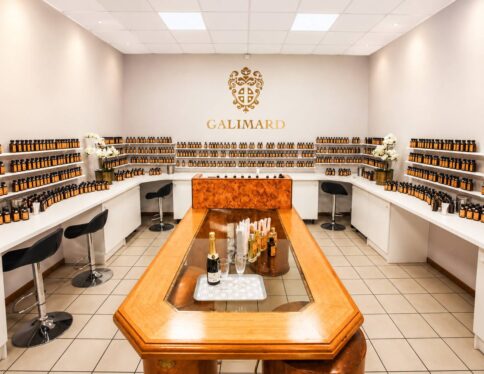
The Galimard Studio des Fragrances celebrates 30 years in Grasse
Written on 11 July 2026
In 2026, our House of Perfume celebrates a special anniversary: that of an unmissable place in Grasse, the world capital of perfume. The Galimard Studio des Fragrances, our iconic bespoke fragrance-creation workshop, is celebrating its 30th anniversary. An opportunity to look back on its past, present and future. A family story driven by a passion for Grasse and its […]
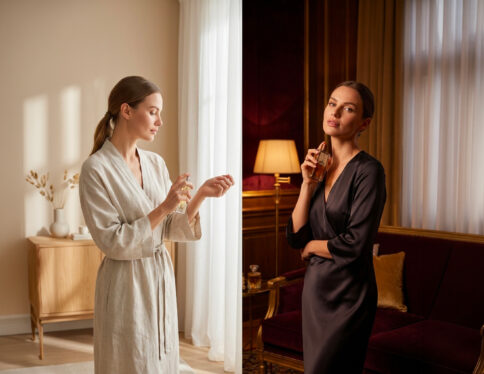
A fragrance for the morning, and one for the evening : the art of mixing it up while maintaining your olfactory identity
Written on 12 June 2026
Perfume can become a part of your day, just as a gorgeous piece of clothing, a mood, or an intention. The gragrance we choose in the morning is not always the same as what we would like to wear in the evening, for a cocktail party, or a special date. However, changing your perfume to […]